

The Southern Way is the name Tourism New Zealand has given to the network of routes linking the south of the South Island into one explorable loop. From Oamaru and Dunedin on the east coast, down to the Catlins and Stewart Island, through Murihiku Southland and into Fiordland before the icing on the cake of Queenstown, Wānaka and Central Otago (or at least that’s how we’d frame it).
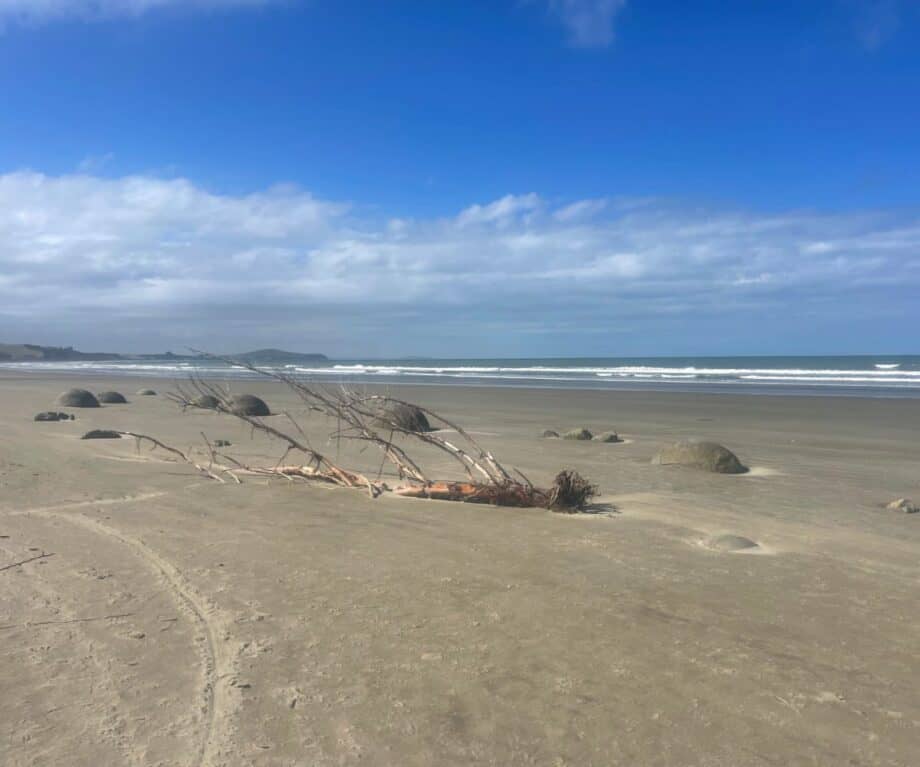
Most visitors drive it over a week to ten days, taking in Milford Sound, the Catlins coastline and the albatross colonies of the Otago Peninsula along the way. It’s a genuinely remarkable route. The renewed direct flights between Dunedin and Australia have made the whole loop considerably easier to access. Time depending, some visitors fly into Dunedin and out of Queenstown completely ‘one half’ of the loop in a visit. Those with more time go ‘all the way round’ or simply choose to linger longer along the way.
Naturally, I’d encourage you to invest the lingering time in the Southern Lakes where a week is never enough let alone a day per place. The section that passes through Queenstown, Wānaka and Central Otago is the part of the Southern Way where slow travel makes the most sense. If the Southern Way is your gateway to the Southern Lakes, plan to stay a while…
Settlements separated by mountain ranges and single lane highways create infinite awe-moments
Queenstown and Wānaka sit about an hour apart via the Crown Range, New Zealand’s highest sealed road, with Arrowtown roughly twenty minutes from Queenstown in between. Between the three, there’s skiing, lake access, walking into genuine wilderness, a photogenic gold rush town, and enough high-octane activities to keep people coming back for more.
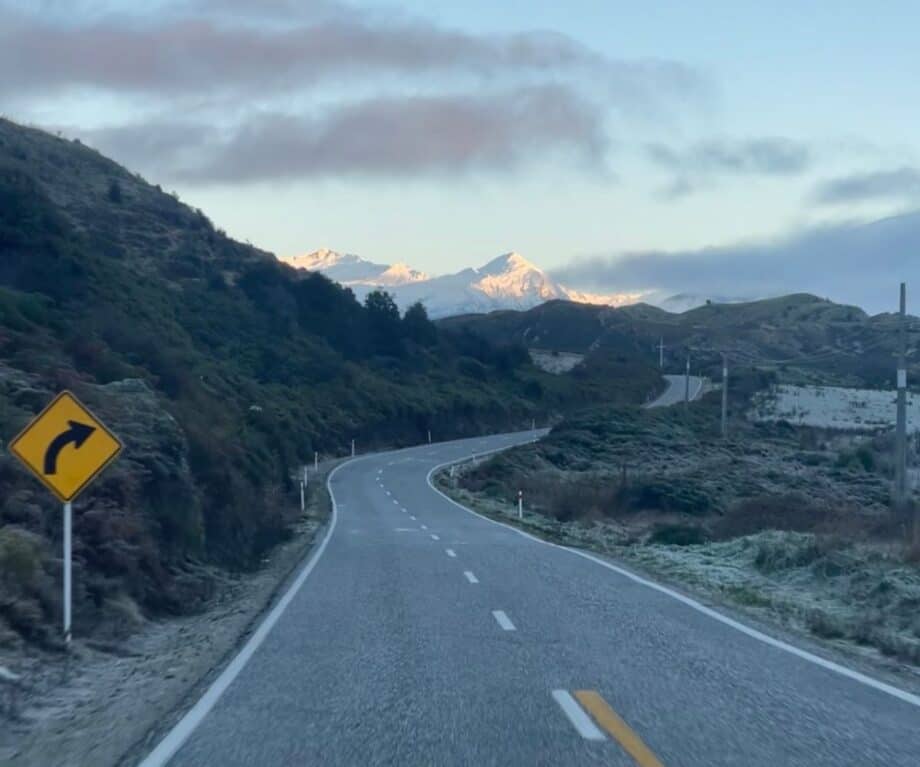
You don’t have to choose between the two. Treating the two larger towns as interchangeable misses what makes each one worth the time. Queenstown’s energy and infrastructure, and Wānaka’s pace and proximity to Mount Aspiring National Park are different experiences, and several nights in each gives you both rather than a blur of one.
Don’t have that amount of time? Try to find at least 3 nights for each.
Wine country has more depth than the cellar door circuit suggests
Most visitors stop in Gibbston, twenty minutes from Queenstown, where Peregrine’s winged roofline, and smaller operations like The Church sit along the gorge road. It’s a good introduction and the valley’s certification as a Dark Sky Park in 2024 makes an evening here worth as much as an afternoon. The Gibbston Tavern is a great excuse to hang around after the cellar doors have closed for the day.
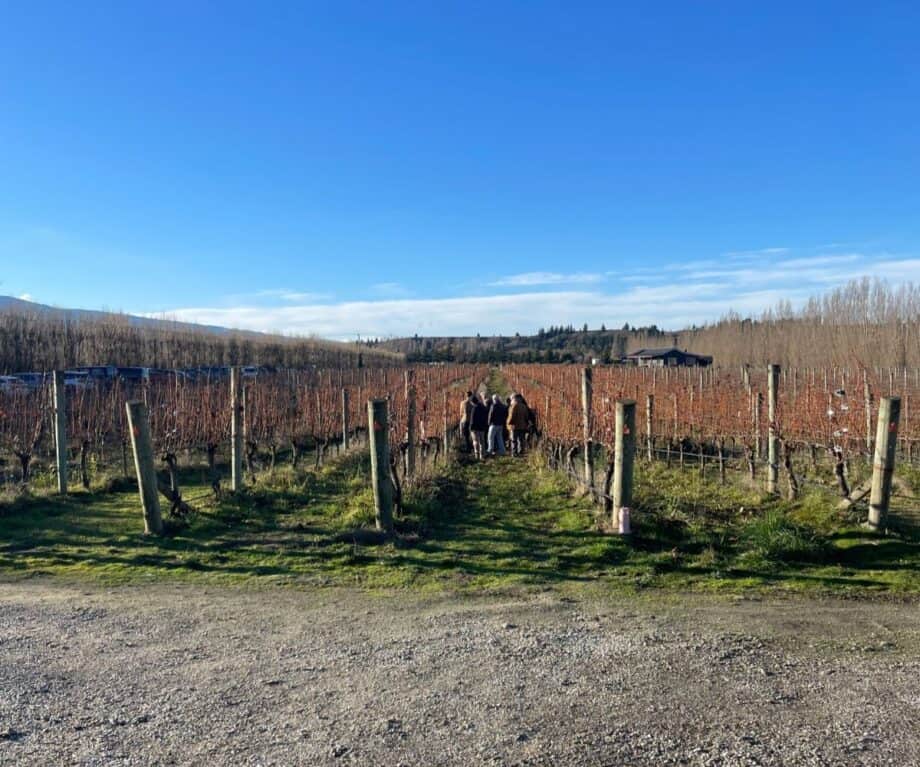
While the wine story might be strongest here – certainly from a tourism perspective – it goes further, and the person most associated with it is Alan Brady. He founded Gibbston Valley Winery 40 years ago, brought in Grant Taylor as Valli’s first winemaker, and later started Mount Edward. When he tried to retire in the mid-2000s he ended up founding Wild Irishman instead, which he’s fighting to keep small and focused on producing the best pinot noir in the world with fellow Northern Irishman Brian Shaw. They have just eight vineyards, drawing fruit from sites across the region including both sides of the river in Alexandra, Bannockburn and Gibbston. The wines trace a wide map and show-off the influences of Central Otago’s varying terroir and sometimes simply the impact of altitude. To taste these wines head to Kinross, back in Gibbston, which acts as Wild Irishman’s cellar door.
Out around Alexandra and Earnscleugh, in orchard country with fewer cellar doors, guided wine and driver tours reach producers many visitors never get to. It’s the kind of detour that explains why people who’ve spent real time here talk about Central Otago Pinot Noir the way others talk about Burgundy. If you cycle the Otago Central Rail Trail do stop at Ruru and Dunstan Road Wines for first-hand tastings with vineyard owners who impart their passion generously (yet humbly. And for those tackling the Lake Dunstan Trail then Carrick is your natural port of call and you’ll both be glad of the rest and grateful for what awaits!
Driving the South Islands roads is part of the experience
The Crown Range road between Queenstown and Wānaka climbs to just over 1,100 metres and passes through Cardrona village on the way down. The alternative route, via the Kawarau Gorge and Cromwell, follows Lake Dunstan through orchard and vineyard country with a completely different character.
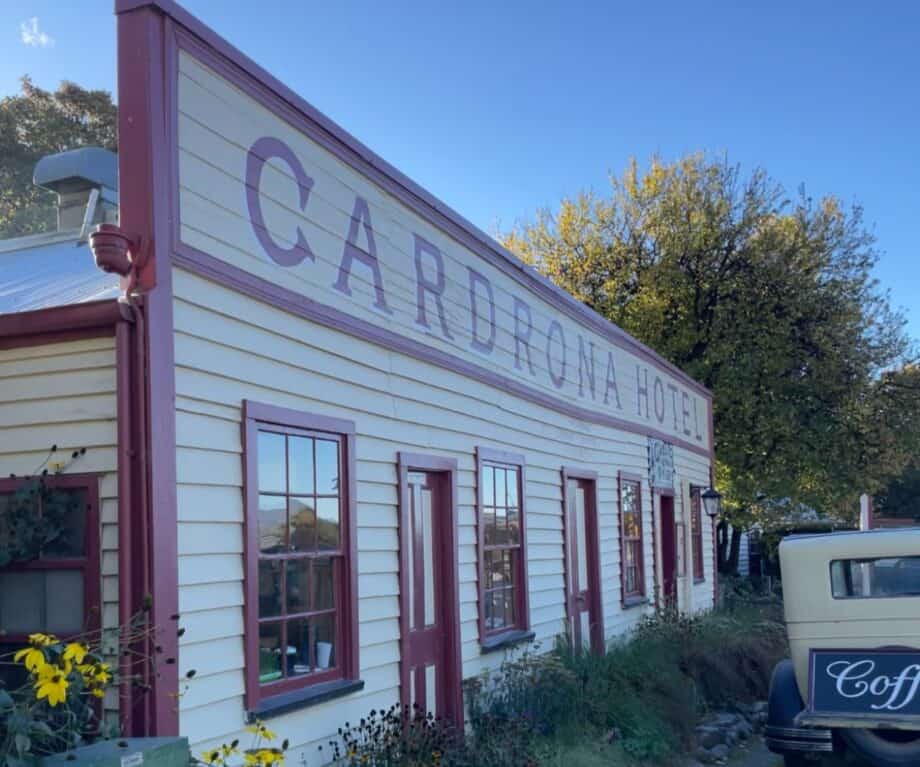
From Wānaka, the road into the Matukituki Valley is its own experience: steering you parallel to the valley floor, the Southern Alps closing in, Mount Aspiring eventually visible at the head of the valley. A picnic and a partway drive in is enough to feel like you’ve found something most people miss. By all means seek a driver-led experience but otherwise check your rental car company is content with you driving through the occasional low level ford.
North of Wānaka, the road along Lake Hāwea and on to Makarora is a different kind of drive again, quieter and less travelled. The mountains that back onto Lake Hāwea are some of the most dramatic in the region, rising almost straight from the water, and the road continues toward the West Coast through country that thins out noticeably the further you go. This stretch is where the rivers turn properly remote: heli-access fishing for wild brown and rainbow trout, in valleys with no road in at all, is some of the best in New Zealand. Whether it’s a day out from Wānaka or a base for a few nights, this corner of the region rewards exactly the kind of traveller who came for the Southern Way’s wilder edges in the first place.
From Queenstown, the road to Glenorchy runs along Lake Wakatipu’s edge to a small settlement at the head of the lake, used as the backdrop for Middle-earth. From there, jet boats run up the Dart River and horse treks head into the valleys, it’s the start of the Routeburn Track too – one of New Zealand’s heralded Great Rides. It’s a spectacular forty-five minute drive, along the lake’s edge, from Queenstown yet feels like you’ve travelled considerably further, especially away from civilisation.
Everything you need to plan your trip in 2026
.kb-row-layout-id200850_b13335-cf > .kt-row-column-wrap{align-content:start;}:where(.kb-row-layout-id200850_b13335-cf > .kt-row-column-wrap) > .wp-block-kadence-column{justify-content:start;}.kb-row-layout-id200850_b13335-cf > .kt-row-column-wrap{column-gap:var(–global-kb-gap-md, 2rem);row-gap:var(–global-kb-gap-md, 2rem);padding-top:var(–global-kb-spacing-sm, 1.5rem);padding-bottom:var(–global-kb-spacing-sm, 1.5rem);grid-template-columns:repeat(2, minmax(0, 1fr));}.kb-row-layout-id200850_b13335-cf > .kt-row-layout-overlay{opacity:0.30;}@media all and (max-width: 1024px){.kb-row-layout-id200850_b13335-cf > .kt-row-column-wrap{grid-template-columns:repeat(2, minmax(0, 1fr));}}@media all and (max-width: 767px){.kb-row-layout-id200850_b13335-cf > .kt-row-column-wrap{grid-template-columns:minmax(0, 1fr);}}
Scenic flights show you what the roads can’t
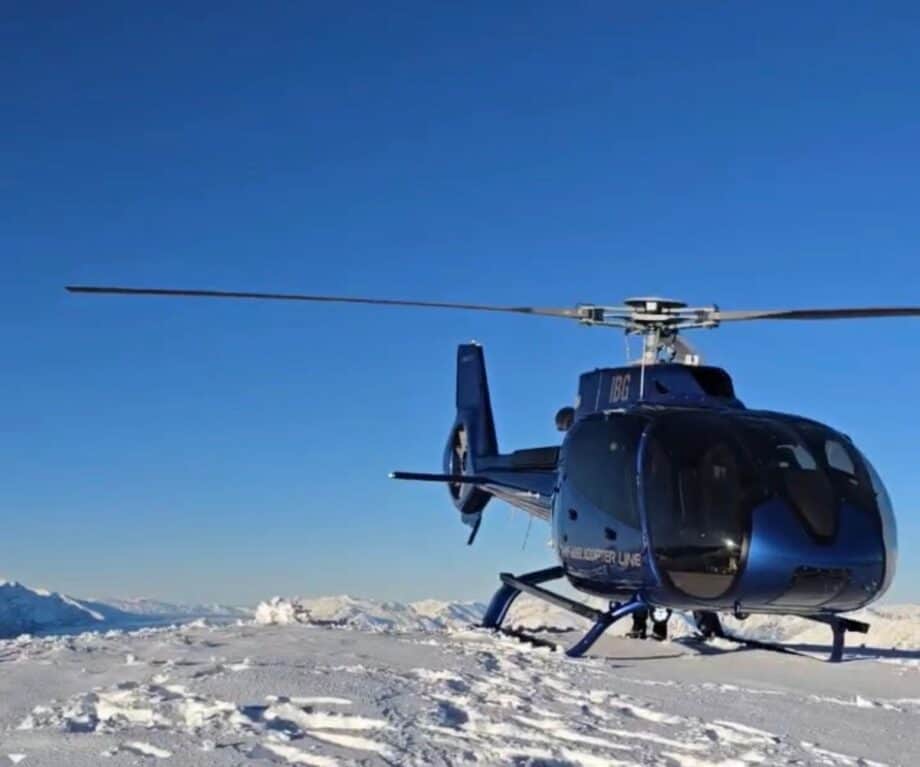
However good the driving is here, there’s a layer of this landscape that only opens up from the air. Operators across Queenstown and Wānaka offer flights over Mount Aspiring, the glaciers of the Southern Alps and Fiordland, and up to Mt Cook/Aoraki. Budget options or first-time helicopter riders appreciate shorter trips with quick landing options and those are available on many routes. For travellers who’ve done the road trip before, or who want a sense of scale before setting out, a scenic flight early in a stay tends to change how everything afterwards is experienced. Scenic flights don’t just have to show you our place from the sky though. Where there is no road in doesn’t mean there’s nothing to do there, so for those inclined, the options for heli-only access activities is surprisingly broad.
The gold rush left more than place names
Arrowtown, Clyde, Cromwell and Bendigo all trace back to the Otago gold rush of the 1860s, and each carries that history differently. Because you’ve done one doesn’t necessarily give you a complete sense of the impact this industry had on the region or how today’s settlements have come to thrive from the intense work of those who came here in search of prosperity.
Arrowtown’s Buckingham Street, with its stone buildings and the Chinese settlement at the edge of town, is the most visited and perhaps the most complete. Besides the restoration and preservation of this small town, its hillsides provide activity in abundant trails and a swathe of autumn colour come March and April, that serves an entire clientele in search of golden backdrop photo opportunities.
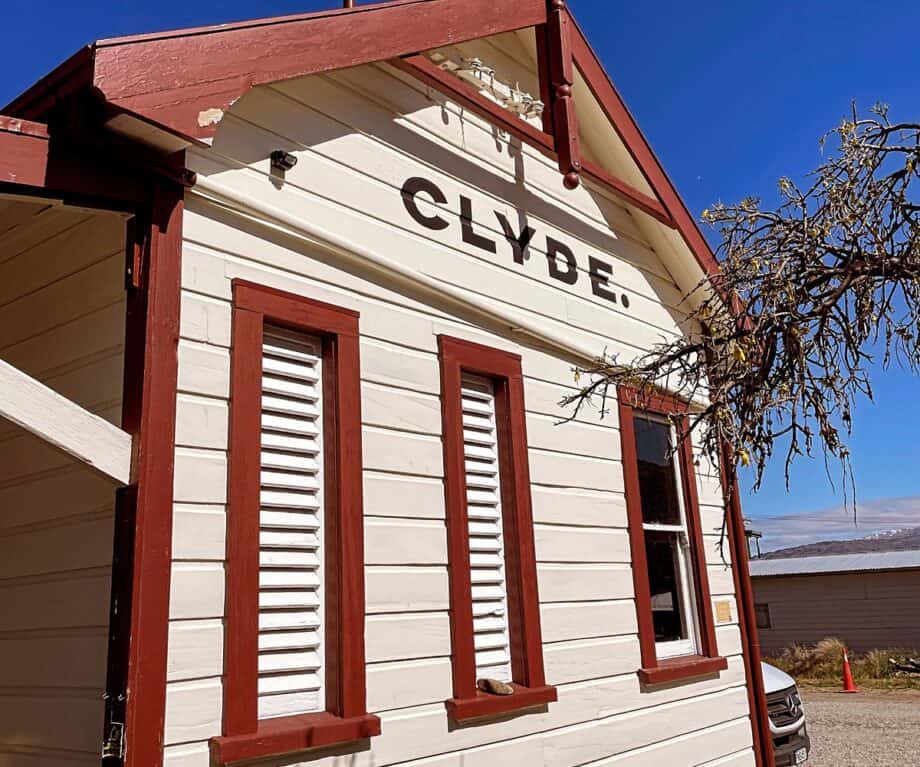
Clyde, further into Central Otago, has one of the most intact nineteenth-century streetscapes in the country. You could be forgiven for thinking cowboys are going to appear round a corner on horseback at any moment. It’s a smaller settlement with a heritage trail of bronze plaques embedded in the pavement guiding you past the boutiques and cafes and deeper into the town past gold mining machinery remnants. This is also the head of the Otago Central Rail Trail and the top or the tail of the Lake Dunstan Trail – cyclists abound!
Cromwell’s old town was partially submerged when Clyde Dam was built and Lake Dunstan was formed and has been carefully preserved on higher ground as the Cromwell Heritage Precinct. Stop for the lake-side vista and the site of the Clutha and Kawarau rivers merging as much as for the artisan craftspeople, artists and history-telling that keeps this once-upon-a-time place thriving.
Bendigo, above Lake Dunstan on the eastern side, is largely abandoned now, its stone ruins scattered across dry hillside, and reachable only on foot from the road. But the Bendigo Loop is worth a drive or a wander on foot for a genuinely atmospheric stop for anyone following State Highway 8 towards Tarras and the Lindis Pass. Treat yourself to a glass or a tasting flight at Cloudy Bay’s Central Otago winery if you do!
Why this is worth coming back for
The reasons people come here in the first place, the mountains, the lakes, the wine, the sense of having found somewhere genuinely remote, are also the reasons they keep coming back. A first visit tends to cover Queenstown and the obvious stops along the way. A second or third visit is when Wānaka’s pace starts to make sense, when the Matukituki or the road to Hāwea and Makarora gets explored properly, when a wine trip extends out to Alexandra. Maybe Bendigo’s ruins or a heli-access river become the point of a later trip rather than an afterthought.
The Southern Way works as a loop you complete once or a route you work you way along piece by piece because it’s genuinely worthy of slow travel. Our part of it works better as a place you return to, each time going a little further off the main road than you did before.

Did you enjoy this article?
Receive similar content direct to your inbox.
.kadence-form-193324_b35617-ee .kadence-blocks-form-field.kb-submit-field { display: none; }